2026 RESEARCH FINDINGS
Vitamin C Supplements and Kidney-Stone Risk: A Clinical Review

A systematic review and meta-analysis found that oral vitamin C supplementation significantly increased 24-hour urinary oxalate in patients with and without a history of kidney stones.
Review the Evidence
Explore the key clinical findings.
EVIDENCE AT A GLANCE
Three numbers summarize the primary findings.
Researchers pooled nine interventional studies examining the effect of oral vitamin C supplementation on 24-hour urine chemistry. The clearest signal was an increase in urinary oxalate compared with both baseline and placebo. Increases were observed in stone formers and non-stone formers, while urinary citrate and calcium showed no significant change.
9 Studies
Studies Included
Interventional studies evaluating vitamin C and 24-hour urine chemistry.
+9.72 mg
Increase vs. Baseline
Mean rise in 24-hour urinary oxalate after supplementation.
+6.45 mg
Increase vs. Placebo
Mean rise versus placebo or no supplementation.
STUDY DESIGN
Designed to isolate supplemental vitamin C.
Only adult interventional studies with 24-hour urine data were included.
Researchers searched four databases and required validated urinary oxalate measurements and reported 24-hour urinary creatinine.
1.
Four Databases Searched
Research published from 1965 through February 2023 was reviewed.
2.
Intervention Studies Only
Oral vitamin C was compared with baseline, placebo, or both.
3.
Validated Urine Data
Studies required 24-hour creatinine and validated oxalate testing.
KEY FINDINGS
Mean urinary oxalate increased by 9.72 mg/24 h versus baseline and 6.45 mg/24 h versus placebo or no supplementation. No significant pooled changes were found in urinary citrate or calcium.
Stone Formers
+13.5 mg/24 h
Studies required 24-hour creatinine and validated oxalate testing.
Non-Stone Formers
+6.64 mg/24 h
Mean increase in urinary oxalate compared with baseline.
Dose Findings
Both doses of ≤1 g/day and >1 g/day produced significant increases. The larger increase occurred at doses above 1 g/day.
Other Urinary Parameters
No significant pooled changes were found in urinary citrate or calcium. Calcium oxalate supersaturation could not be pooled because only two studies reported it.
Urinary oxalate increased after supplementation.
The effect appeared in stone formers and non-stone formers.
CLINICAL RELEVANCE
Supplemental exposure deserves a closer look.
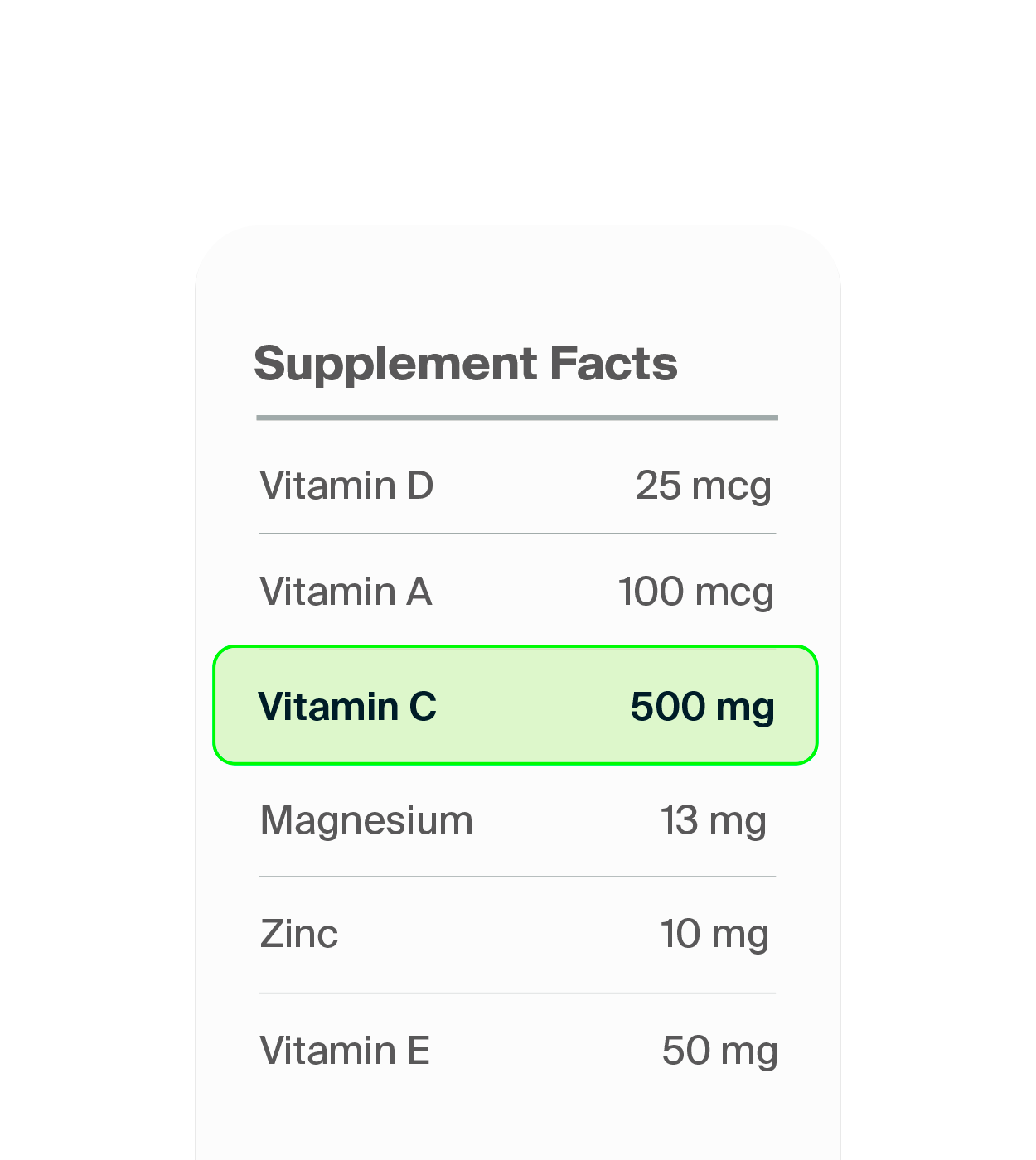
Vitamin C can accumulate across several over-the-counter products.
For patients at risk for calcium oxalate stones, consider total vitamin C from multivitamins, immune products, powders, and beverages alongside stone type and 24-hour urine findings.
CERO® IN CONTEXT
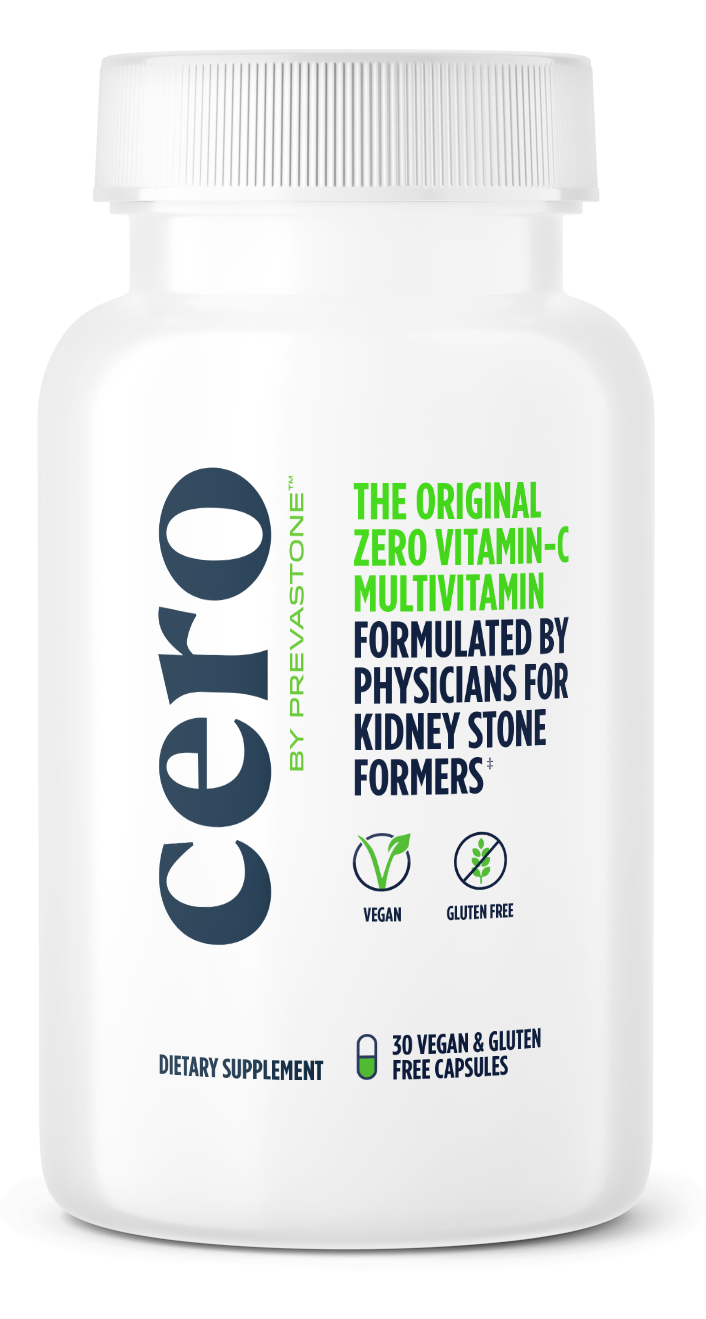
A multivitamin formulated without vitamin C.
CeroMulti® was not evaluated in the meta-analysis. The research does not establish that CeroMulti prevents stones or improves clinical outcomes.
An option for patients and clinicians reviewing supplemental intake.
PUBLISHED RESEARCH
Review the complete meta-analysis.
Explore the methods, effect sizes, forest plots, and limitations.
Read the published research by Farkouh, Baldwin, and colleagues in the Journal of Endourology.
Farkouh A, Seibly E, Buell MI, et al. The Effect of Vitamin C Supplements on Urinary Stone Risk: A Systematic Review and Meta-Analysis. Journal of Endourology. Published online 2026. doi:10.1177/08927790261471733.
Article disclosure: D. Duane Baldwin, MD, reported serving as a board member of ALARAmed. The authors reported receiving no funding for the article.