

Got Stones? Get Hydrated! How Much Water Lowers Your Risk?
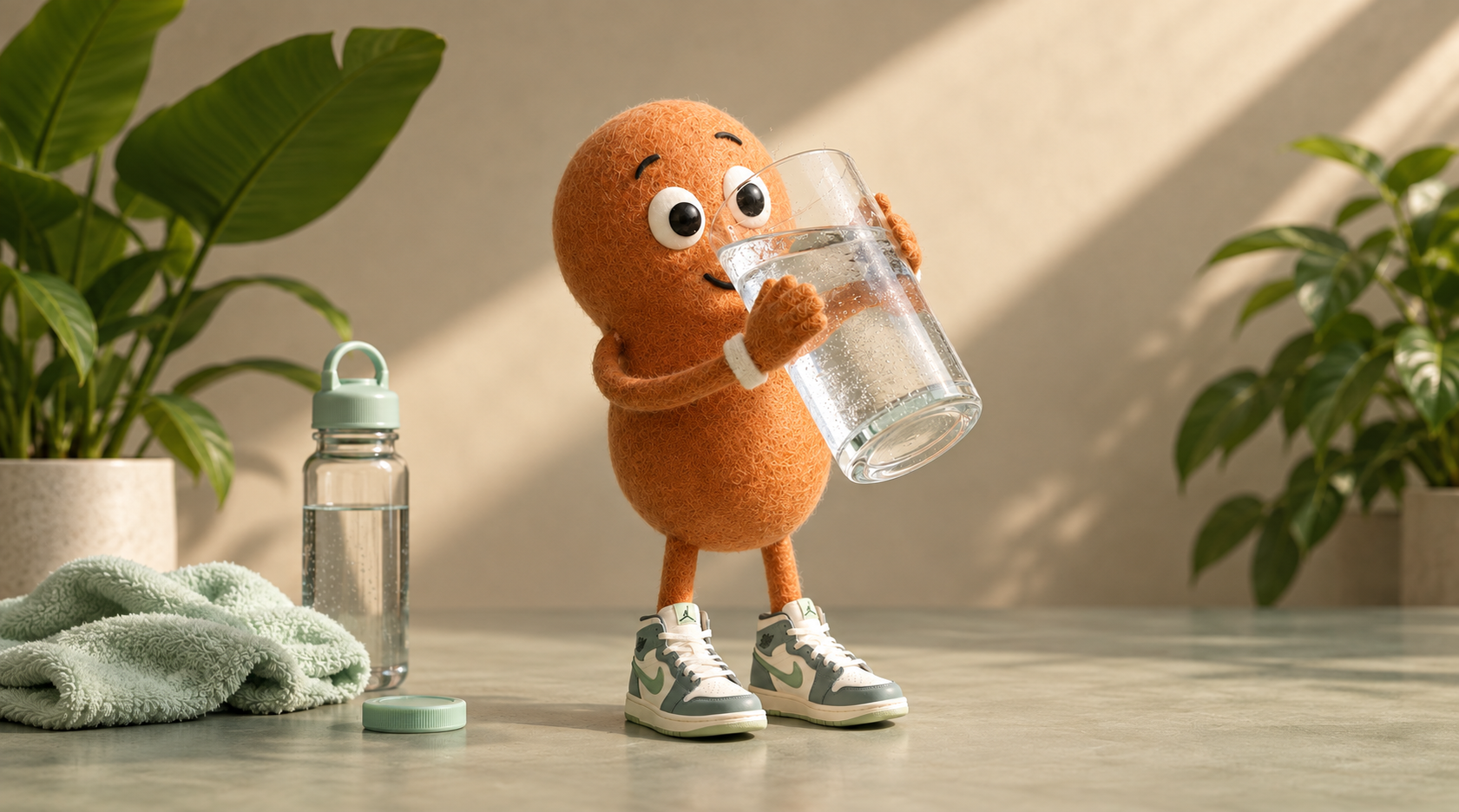
A few simple changes can make a meaningful difference.
If you've ever had a kidney stone, you already know the golden rule: don't give those little rocks a reason to come back.
One of the simplest ways to help lower your kidney stone recurrence risk is staying adequately hydrated. But how much water is enough?
The Magic Number Isn't 8 Glasses
You've probably heard the “8 glasses a day” rule. While that's a reasonable general hydration guideline, people who form kidney stones may need more.
The American Urological Association recommends drinking enough fluid to produce at least 2.5 liters of urine per day (American Urological Association [AUA], 2014).
That's about 85 ounces of urine—or roughly 10½ cups.
Notice we said urine, not water.
Your body loses fluid through sweating, breathing, and other normal processes, so you generally need to drink more than 85 ounces of fluid to produce 85 ounces of urine.
For many people, roughly 80–100 ounces of fluid per day may be a reasonable starting point, with additional fluids needed during exercise, hot weather, or heavy sweating (National Kidney Foundation [NKF], 2025).
Why Does Water Help?
Kidney stones can form when minerals and other substances in your urine become too concentrated.
Think of your urine like a glass of lemonade:
More water = more dilution.
Less water = more concentration.
When you're dehydrated, your kidneys produce less urine, allowing stone-forming substances to become more concentrated. Drinking enough fluid helps dilute those substances and flush them through your urinary tract (National Institute of Diabetes and Digestive and Kidney Diseases [NIDDK], 2017).
That's why hydration for kidney stone prevention is one of the most important—and easiest—habits for people prone to stones.
Don't Wait Until You're Thirsty
Make hydration a habit rather than a rescue mission.
Keep a water bottle nearby. Drink throughout the day. And increase your fluid intake when you're exercising or sweating.
Your urine can also provide a helpful clue. Pale-yellow urine generally indicates better hydration, while darker urine can be a sign that you need more fluid (NIDDK, 2020).
For people who repeatedly form stones, however, urine color isn't enough. A 24-hour urine test for kidney stone prevention can measure your total urine volume and identify other factors—such as calcium, oxalate, citrate, and uric acid—that may contribute to stone formation.
Does Lemon Water Help?
It can—and not just because it makes water more interesting.
Citrus fruits contain citrate, which may help inhibit the formation of certain kidney stones (NIDDK, 2017).
So if adding lemon to your water helps you drink more, that's a pretty good trade.
Just remember: lemon water isn't a magic kidney stone cure. Hydration is the star of the show.
Can You Drink Too Much Water?
Yep.
More isn't always better. Drinking excessive amounts of water in a short period can cause dangerous electrolyte imbalances.
And if you have a medical condition that requires fluid restriction, such as certain kidney or heart conditions, talk with your healthcare professional before increasing your fluid intake.
The goal isn't to win a water-drinking contest.
The goal is adequate hydration for kidney stone prevention.
Final Thoughts
The best kidney stone is the one that never forms.
Just keep the water flowing.
Drink enough. Stay hydrated. Keep your urine dilute. Give kidney stones fewer opportunities to become the next unwanted houseguest.
Your kidneys will thank you.
The CeroMulti® Difference
Most multivitamins are built around inclusion—adding more ingredients to appear comprehensive.
One of the things that makes CeroMulti® many traditional multivitamins is its intentional, physician-formulated approach to ingredient selection. Rather than following the “more is better” philosophy common in many supplements, CeroMulti® was specifically designed with a kidney stone–aware philosophy that carefully considers nutrients associated with urinary chemistry and stone risk.
The formula intentionally avoids excessive amounts of ingredients that may be unnecessary for many individuals while emphasizing thoughtful components such as magnesium citrate. CeroMulti® also embraces a food-first wellness approach, encouraging individuals to obtain key nutrients from healthy dietary sources whenever possible while using supplementation to thoughtfully fill nutritional gaps—not overload the body with megadoses.
Key Takeaways
Aim for enough fluid to produce at least 2.5 liters of urine daily.
That's the clinical target recommended for people who form kidney stones (AUA, 2014).80–100 ounces of fluid may be a useful starting point for many people.
You may need more when exercising, sweating, or spending time in hot weather.Drink throughout the day.
Don't wait until you're thirsty and then try to catch up.Water isn't the only piece of the puzzle.
Diet, sodium, calcium, oxalate, citrate, and your individual stone type can all influence kidney stone prevention.If you've had recurrent stones, consider a 24-hour urine test.
It can help your healthcare professional create a more personalized kidney stone prevention plan.
References
American Urological Association. (2014). Medical management of kidney stones: AUA guideline. American Urological Association.
National Institute of Diabetes and Digestive and Kidney Diseases. (2017). Eating, diet, & nutrition for kidney stones. U.S. Department of Health and Human Services, National Institutes of Health.
National Institute of Diabetes and Digestive and Kidney Diseases. (2020). The urinary tract & how it works. U.S. Department of Health and Human Services, National Institutes of Health.
National Kidney Foundation. (2025). Kidney stone diet plan and prevention. National Kidney Foundation.
