

2026 RESEARCH FINDINGS
Had a kidney stone? Take a closer look at your supplements.
A new systematic study found that vitamin C supplements increased urinary oxalate—a substance involved in the most common type of kidney stone. Here’s what that may mean for you, in plain English.
Inside the Research
Choose a topic to learn more.
THE FINDING
The short version: supplemental vitamin C raised urinary oxalate.
Researchers combined results from nine intervention studies. Across the evidence, people excreted more oxalate in their urine after taking vitamin C supplements.
9 Studies
Examining Vitamin C and Oxalate
Researchers combined findings from nine studies examining how vitamin C supplements affect urine chemistry.
+9.72 mg
The Average Increase
Average increase in 24-hour urinary oxalate compared with participants’ own baseline.
Two Groups
Showed Higher Oxalate
Increases were observed in people with a history of stones and in people without one.
WHAT IT MEANS
Vitamin C Can Become Oxalate
The connection begins with what your body doesn’t use.
Your body uses the vitamin C it needs. Some of the rest can become oxalate, a natural waste product that passes through your urine and can play a role in kidney stone formation.
1.
You Take Vitamin C
It may be in a standalone pill, drink mix, immune product or multivitamin.
2.
Some Becomes Oxalate
Vitamin C can be metabolized into oxalate inside the body.
3.
Oxalate Enters Urine
More urinary oxalate may raise calcium oxalate stone risk.
Important context: The longest study lasted six days and measured changes in urine—not long-term kidney stone outcomes.
KEEP IT IN PERSPECTIVE
What this research does—and doesn’t—tell us.
It does tell us.
Vitamin C supplements increased urinary oxalate on average.
The increase appeared in stone formers and non-stone formers.
Higher supplemental doses tended to produce larger increases in kidney stone formation.
It does not tell us.
That everyone taking vitamin C will eventually develop a kidney stone.
Whether long-term kidney stone recurrence rates changed.
That CeroMulti itself was tested in these studies directly.
CHECK YOUR LABEL
One quick label check can start a smarter conversation.
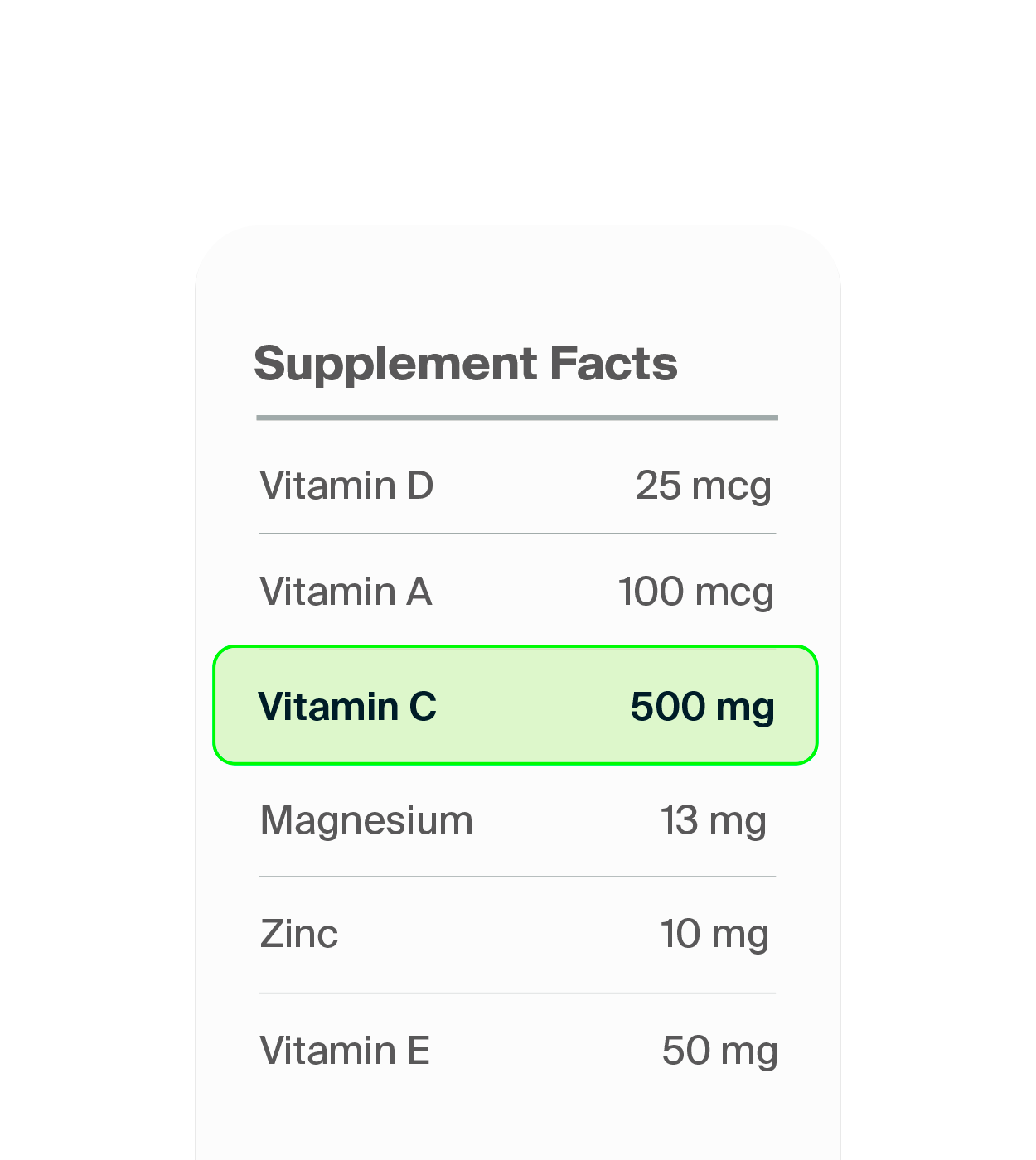
Vitamin C can appear in more than one product, so the amounts can add up. Look at multivitamins, immune support products, powders and drinks.
Words to watch for:
Vitamin C · Ascorbic Acid · Sodium Ascorbate · Calcium Ascorbate
A SMARTER MULTIVITAMIN
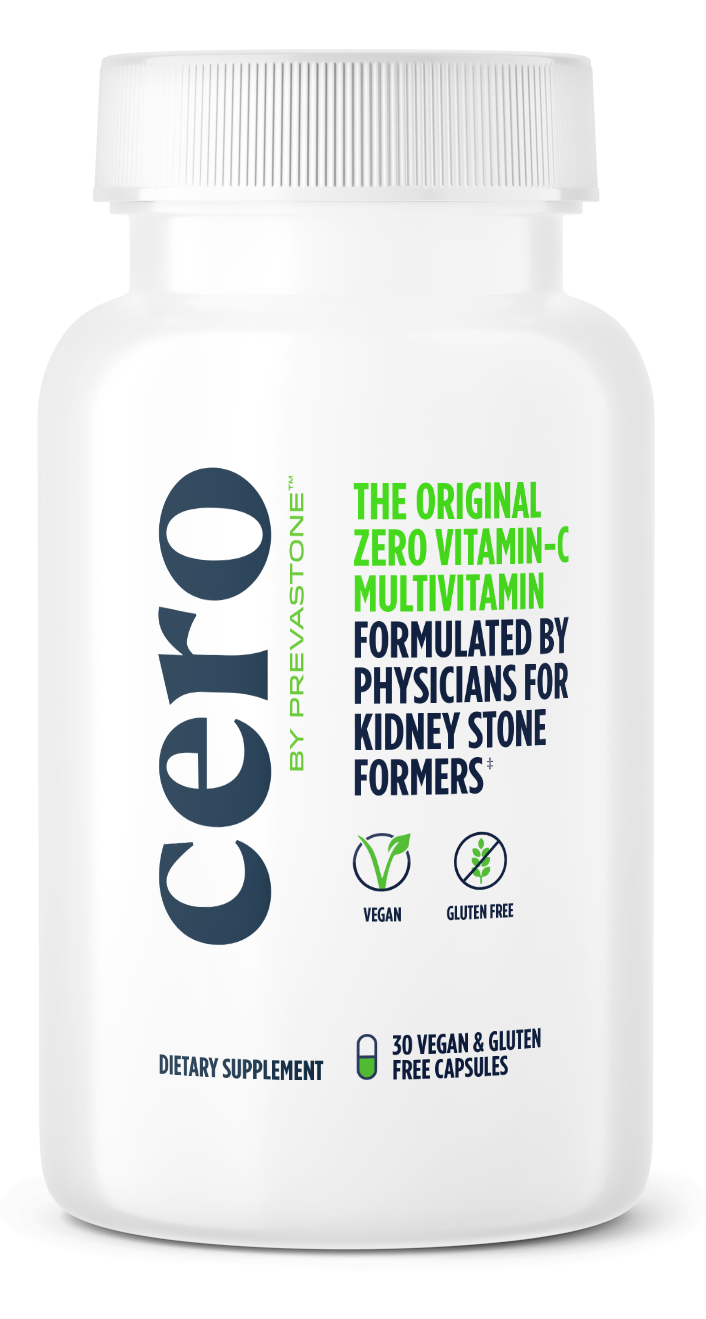
A physician-formulated multivitamin created for kidney stone formers.
CeroMulti® was designed for everyday nutritional support while thoughtfully considering key ingredients often discussed in kidney-stone care.
ASK YOUR DOCTOR
Three useful questions to bring with you.
CeroMulti® was designed for people who want everyday nutritional support while being thoughtful about ingredients often discussed in kidney-stone care.
What type of kidney stone did I have?
1.
Different stone types can call for different nutrition guidance.
Am I getting too much vitamin C?
2.
Bring photos of every supplement label so your clinician can see the total.
Would a 24-hour urine test help?
3.
Ask whether testing could help tailor advice to your individual risk factors.
COMMON QUESTIONS
A Few More Things Worth Knowing.
-
Don’t change a supplement prescribed for a medical reason without talking with your clinician. Instead, review your total supplemental amount and your personal stone history with them.
-
This review focused on vitamin C supplements. Foods provide vitamin C in a different dietary context and can still be part of a balanced eating pattern. Ask your clinician or dietitian for individualized advice.
-
No. It is one risk factor, not a prediction. Hydration, urine volume, sodium, calcium intake, genetics and other factors can also matter.
-
No. CeroMulti was not one of the interventions studied. The product connection is that CeroMulti is formulated without added vitamin C.

PATIENT RESOURCE
Take the Research With You
The key findings, simplified.
Download a concise patient takeaway covering the study’s key findings, what they may mean, and questions to discuss with your clinician.
Farkouh A, Seibly E, Buell MI, et al. The Effect of Vitamin C Supplements on Urinary Stone Risk: A Systematic Review and Meta-Analysis. Journal of Endourology. Published online 2026. doi:10.1177/08927790261471733.
Article disclosure: D. Duane Baldwin, MD, reported serving as a board member of ALARAmed. The authors reported receiving no funding for the article.